Detrol LA (Tolterodine Tartrate)

Get Ozempic $329 + FREE Interactive Weight-Loss Guides (Code:MyGuide)
×
Drug Description


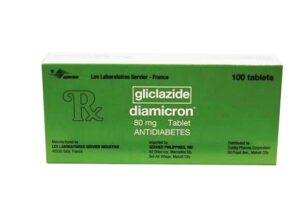
Diamicron (Gliclazide) is an oral medication designed to help manage blood sugar levels in adults with type 2 diabetes. It works by stimulating the pancreas to release insulin, which lowers glucose levels in the blood. Diamicron is typically used in conjunction with a balanced diet and exercise regimen and may be prescribed alone or in combination with other diabetes medications to optimize blood sugar control.
| Facts | Details |
| Generic Name | Gliclazide |
| Brand Name | Diamicron |
| Drug Class | Sulfonylureas |
| Indication | Type 2 Diabetes Mellitus |
| Mechanism of Action | Stimulates insulin secretion from pancreatic beta cells by binding to sulfonylurea receptors. |
| Dosage Forms | Tablets (Immediate-Release and Modified-Release forms) |
| Strengths Available | 30 mg, 60 mg, 80 mg |
| Route of Administration | Oral |
| Recommended Dosage | – Immediate-Release: 40-320 mg per day, in divided doses – Modified-Release: Once daily |
| Common Side Effects | Hypoglycemia, headache, dizziness, nausea, abdominal pain |
| Contraindications | Type 1 diabetes, diabetic ketoacidosis, severe renal or hepatic impairment |
| Drug Interactions | May interact with beta-blockers, NSAIDs, anticoagulants, ACE inhibitors, and other antidiabetic agents |
| Storage Conditions | Store below 25°C, protect from light and moisture |
| Monitoring Requirements | Blood glucose levels, liver function, signs of hypoglycemia |
| Approval Status | Approved by various international health authorities (e.g., FDA, EMA) for Type 2 diabetes |
Like all medications, Diamicron (Gliclazide) can cause side effects, although not everybody gets them. Understanding these side effects can help you use this medication safely and effectively.
If you experience any side effects, discuss them with your healthcare provider. They can offer advice and may adjust your treatment if necessary. Report any severe or unexpected side effects immediately.
You can order Diamicron (Gliclazide) using these methods on our website:
Visit our How to order page.

Diamicron MR (Modified Release) is a prescription medication containing Gliclazide, a sulfonylurea that helps manage blood sugar levels in adults with type 2 diabetes. It works by stimulating the pancreas to produce more insulin and improving the body’s sensitivity to this hormone.
| Facts | Details |
| Generic Name | Gliclazide |
| Brand Name | Diamicron MR |
| Medication Type | Oral antidiabetic agent (sulfonylurea class) |
| Purpose | To manage blood sugar levels in adults with Type 2 Diabetes Mellitus (T2DM) |
| Mechanism of Action | Stimulates the pancreas to release insulin by acting on beta cells |
| Formulation | Modified-Release (MR) tablets |
| Dosage Strengths | Commonly available in 30 mg and 60 mg tablets |
| Route of Administration | Oral |
| Frequency of Use | Once daily, preferably with breakfast |
| How to Take | Swallow the tablet whole with water; do not crush or chew |
| Key Benefits | – Provides consistent blood sugar control throughout the day – Reduces fasting and postprandial blood glucose levels – Convenient once-daily dosing |
| Indications | Type 2 Diabetes Mellitus (when diet and exercise alone are insufficient to control blood sugar) |
| Common Side Effects | – Hypoglycemia (low blood sugar) – Nausea or gastrointestinal discomfort – Headache – Dizziness |
| Drug Interactions | – Increased risk of hypoglycemia with other antidiabetics or alcohol – May interact with corticosteroids, diuretics, or beta-blockers |
| Storage Requirements | Store at room temperature (below 25°C) in a dry place, away from direct sunlight and moisture |
| Missed Dose Guidance | Take it as soon as you remember unless it is close to the next dose; do not double doses |
| Availability | Prescription-only |
Like all medications, Diamicron MR (Gliclazide) can cause side effects, although not everybody gets them. Understanding these side effects can help you use this medication safely and effectively.
If you experience any of these side effects or others, make sure to discuss them with your healthcare provider. They can offer advice and may adjust your treatment if necessary. Report any severe or unexpected side effects immediately.
You can order Diamicron MR (Gliclazide) using these methods on our website:
Visit our How to order page.
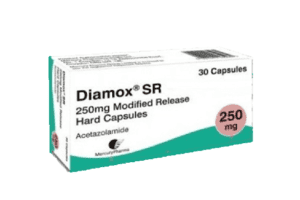
Diamox is a versatile medication primarily used to treat glaucoma, altitude sickness, and certain types of seizures. Its active ingredient, Acetazolamide, belongs to a class of drugs known as carbonic anhydrase inhibitors. Diamox works by decreasing fluid production in the eye and increasing urine production in the kidneys, helping to adjust the body’s acid-base balance.
| Facts | Details |
| Generic Name | Acetazolamide |
| Brand Names | Diamox, Diamox Sequels |
| Medication Type | Carbonic anhydrase inhibitor |
| Approved Uses | – Treatment of glaucoma- Management of epilepsy (as an adjunctive therapy) – Prevention or treatment of altitude sickness – Management of certain types of edema |
| Administration Route | Oral, Injection |
| Dosage Forms | – Tablet: 125 mg, 250 mg – Extended-release capsule: 500 mg- Injectable: 500 mg for reconstitution |
| Common Side Effects | – Numbness or tingling in the fingers or toes – Fatigue- Nausea or vomiting – Diarrhea – Altered taste sensations |
| Contraindications | – Hypersensitivity to acetazolamide or any component of the formulation – Severe kidney or liver disease- Electrolyte imbalances – Addison’s disease |
| Drug Interactions | – Aspirin and other salicylates – Other carbonic anhydrase inhibitors – Antiepileptic drugs- Lithium- Cyclosporine |
| Mechanism of Action | Inhibits carbonic anhydrase enzyme, reducing the formation of bicarbonate ions, leading to reduced fluid transport and decreased production of aqueous humor and cerebrospinal fluid. |
| Monitoring Parameters | – Electrolyte levels- Blood pH – Blood glucose levels- Complete blood count |
| Storage Instructions | Store at room temperature away from moisture and heat. |
Like all medications, Diamox (Acetazolamide) can cause side effects, although not everybody gets them. Understanding these side effects can help you use this medication safely and effectively.
If you experience any side effects, discuss them with your healthcare provider. They can offer advice and may adjust your treatment if necessary. Report any severe or unexpected side effects immediately.
You can order Diamox (Acetazolamide) using these methods on our website:
Visit our How to order page.


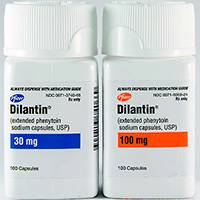
Dilantin (Phenytoin Sodium) is a prescription medication used primarily to prevent and control seizures. As an anticonvulsant or antiepileptic drug, it works by slowing down impulses in the brain that cause seizures. Phenytoin is used in the treatment of various types of seizures, including tonic-clonic (grand mal) and partial seizures.
| Facts | Details |
| Generic Name | Phenytoin Sodium |
| Brand Name | Dilantin |
| Drug Class | Anticonvulsant, Anti-epileptic |
| FDA Approved | Yes |
| Primary Use | Prevention and control of seizures |
| Administration Route | Oral, Intravenous |
| Available Forms | Capsules, Tablets, Injectable solution |
| Typical Dosage | Dosage varies based on patient condition and response; to be determined by a healthcare provider |
| Key Benefits | Effective in reducing seizure frequency, versatile in treating various types of seizures, available in multiple forms |
| Common Side Effects | Dizziness, nausea, gum overgrowth, hair and skin changes, mood swings |
| Interactions | May interact with other medications including anticoagulants and certain antibiotics |
| Contraindications | Hypersensitivity to Phenytoin or other hydantoins, patients with certain heart conditions |
| Pregnancy Category | D (Evidence of risk) |
| Usage in Pregnancy | Consult healthcare provider; potential risks must be weighed against benefits |
| Alcohol Interaction | Alcohol may increase serum levels of Phenytoin and worsen side effects |
| Effect on Driving | May impair the ability to drive or operate machinery; caution advised |
| Monitoring Requirements | Regular monitoring of Phenytoin blood levels, liver function tests, and other health parameters |
| Treatment Duration | Long-term use common in chronic seizure disorders |
Like all medications, Dilantin (Phenytoin Sodium) can cause side effects, although not everybody gets them. Understanding these side effects can help you use this medication safely and effectively.
If you experience any side effects, discuss them with your healthcare provider. They can offer advice and may adjust your treatment if necessary. Report any severe or unexpected side effects immediately.
You can order Dilantin (Phenytoin Sodium) using these methods on our website:
Visit our How to order page.

Dilantin Infatabs, containing the active ingredient Phenytoin Sodium, is an effective prescription medication used to manage and control seizures associated with epilepsy. Designed as chewable tablets, they offer a convenient option for individuals who have difficulty swallowing pills. Dilantin works by stabilizing electrical activity in the brain, helping to prevent excessive nerve signals that can lead to seizures.
| Facts | Details |
| Brand Name | Dilantin Infatabs |
| Generic Name | Phenytoin Sodium |
| Drug Class | Anticonvulsant (Hydantoin derivative) |
| Formulation | Chewable Tablets |
| Indications | – Management of generalized tonic-clonic (grand mal) seizures – Partial seizures – Seizure prevention during/after neurosurgery |
| Mechanism of Action | Stabilizes neuronal membranes and decreases seizure activity by reducing the propagation of abnormal electrical discharges in the brain. |
| Administration | Oral |
| Recommended Dosage | – Adults: As prescribed by your doctor, typically ranging from 300 mg/day in divided doses. – Children: Dosing is weight-dependent; follow pediatrician recommendations. |
| Key Benefits | – Effective in controlling seizure activity – Long history of use in epilepsy management – Chewable form makes it easy to administer, especially for children |
| How to Use | – Take with food to avoid stomach upset. – Chew thoroughly before swallowing, or as directed by your healthcare provider. – Adhere to your prescribed dosing schedule to maintain steady drug levels in the body. |
| Important Safety Information | – Do not stop taking Dilantin Infatabs suddenly without consulting your doctor, as this can increase the risk of seizures. – Regular blood tests may be required to monitor therapeutic levels and prevent toxicity. – Inform your doctor if you have liver disease, diabetes, or a history of hypersensitivity to phenytoin or similar medications. |
| Common Side Effects | – Dizziness – Drowsiness – Nausea or vomiting – Gum overgrowth (gingival hyperplasia) – Skin rash – Tremors |
| Drug Interactions | – May interact with anticoagulants (e.g., warfarin), oral contraceptives, corticosteroids, and certain antibiotics (e.g., rifampin). – Alcohol consumption may increase the risk of side effects and alter drug levels. |
| Storage Instructions | – Store at room temperature (15°C – 30°C / 59°F – 86°F). – Keep away from direct light, moisture, and out of reach of children. |
| Missed Dose Instructions | If you miss a dose, take it as soon as you remember. If it’s close to the time of your next dose, skip the missed dose and resume your regular schedule. Do not double doses. |
| Availability | Prescription-only |
Like all medications, Dilantin Infatabs (Phenytoin Sodium) can cause side effects, although not everybody gets them. Understanding these side effects can help you use this medication safely and effectively.
If you experience any side effects, discuss them with your healthcare provider. They can offer advice and may adjust your treatment if necessary. Report any severe or unexpected side effects immediately.
You can order Dilantin Infatabs (Phenytoin Sodium) using these methods on our website:
Visit our How to order page.
 OZEMPIC: Huge price drop limited stock, limited time opportunity. Click here to order.
| Was | Now | Save | |
|---|---|---|---|
| 1 Pen | $429.79 | Save $40 | |
| 2 Pens | $848.79 | Save $81 | |
| 3 Pens | $1257.59 | Save $122 | |
| 4 Pens | $1656.59 | Save $163 | |
| 5 Pens | $2045.59 | Save $203 | |
| 6 Pens | $2424.59 | Save $244 |
Basaglar : Huge price drop limited stock, limited time opportunity. Click here to order.
| Was | Now | Save | |
|---|---|---|---|
| 5 Pens | $116.95 | Save $44 | |
| 10 Pens | $226.95 | Save $49 | |
| 15 Pens | $321.95 | Save $54 | |
| 20 Pens | $428.79 | Save $63 |
*FreeShipping via Canada Post (CP)
We’re happy to share that Canada Post has resumed shipping!
We know how important medications are, and we deeply appreciate your patience and understanding during the challenge posed when Canada Post was on strike, something we had never experienced in our many years of service to you. That is why we are providing free CP shipping or subsidized FedEx shipping until December 31St
 Free shipping is available for all orders $100 and above as a thank you for your understanding.
 Please note: Canada Post is working to clear their backlog, so slight delays may still occur.
FedEx
We are doing some very limited number of FedEx shipping (limited number because FedEx is overloaded because of Canada Post’s strike), and we are subsidizing the cost of this faster services in appreciation of your patronage. The actual rate for FedEx is a little more than $70, but we are subsidizing it so those who want it only pay a little

 MOUNJARO (12.5mg): Save up to 70% Use code MN12MG for an additional 10% off for 12.5mg. Chat now to order and save up to $90 or